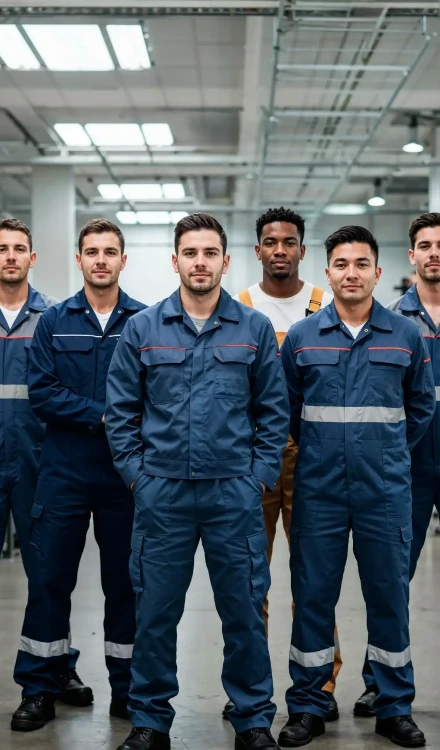
Precision Piping Stress Analysis Service


Let's Talk About Your Project
Fill out the form below, and we’ll handle the rest!
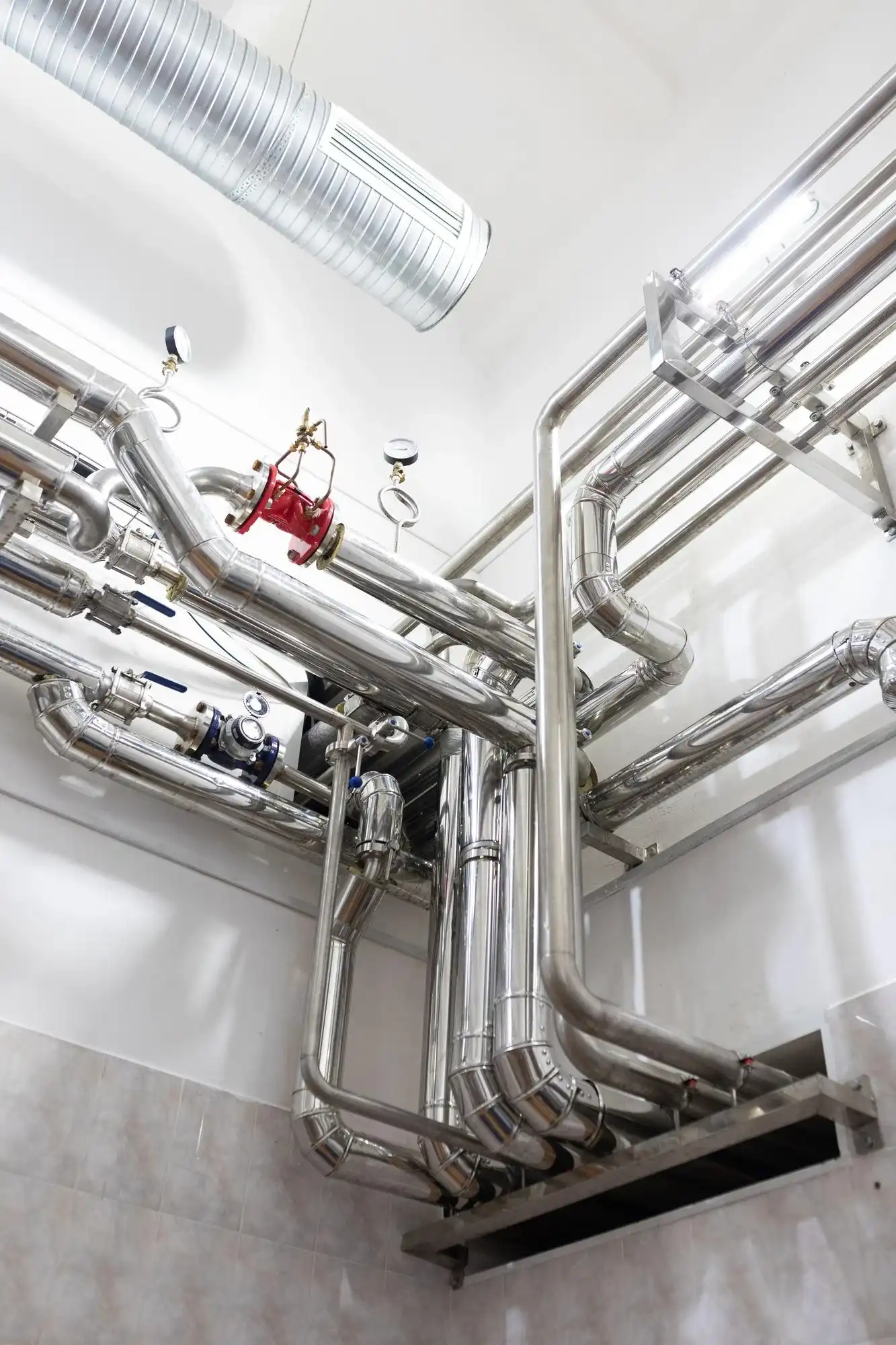
Critical Mechanical Design Gaps You Must Fix
- Pipe overstress and fatigue failure
- Excessive thermal expansion or contraction
- Nozzle overload on equipment and tanks
- Support failure or lift-off
- Uncontrolled displacement or misalignment
- Cracking at weld joints or anchors
- Leakage at flanged connections
- Vibration and resonance issues
- Interference with adjacent systems
- Inability to accommodate future thermal cycles
Baseline – Specializing in the Best Piping Stress Analysis Services in Vadodara
Baseline conducts comprehensive pipe stress analysis using industry-leading software like CAESAR II, verifying compliance with international codes such as ASME B31.1, B31.3, and applicable standards for both metallic and non-metallic systems. Our approach is rooted in accuracy, safety, and long- term reliability.
We perform stress analysis for metallic, non-metallic, and FRP piping across a wide range of industrial applications, including hot, cold, and cryogenic systems. Our piping system analysis includes evaluating thermal expansion, sustained loads, occasional loads, wind, seismic, and nozzle loads to verify system integrity under all operating conditions.
Our expert team optimizes support locations, expansion loops, flexibility, and anchor points—ensuring proper stress distribution and minimal loading on equipment. We deliver stress reports, compliance documentation, and recommended modifications to support a smooth handover to fabrication and site teams. With Baseline, you get stress analysis that’s not only code- compliant but construction-ready.
Stress Analysis: The Backbone of Reliable Piping Design
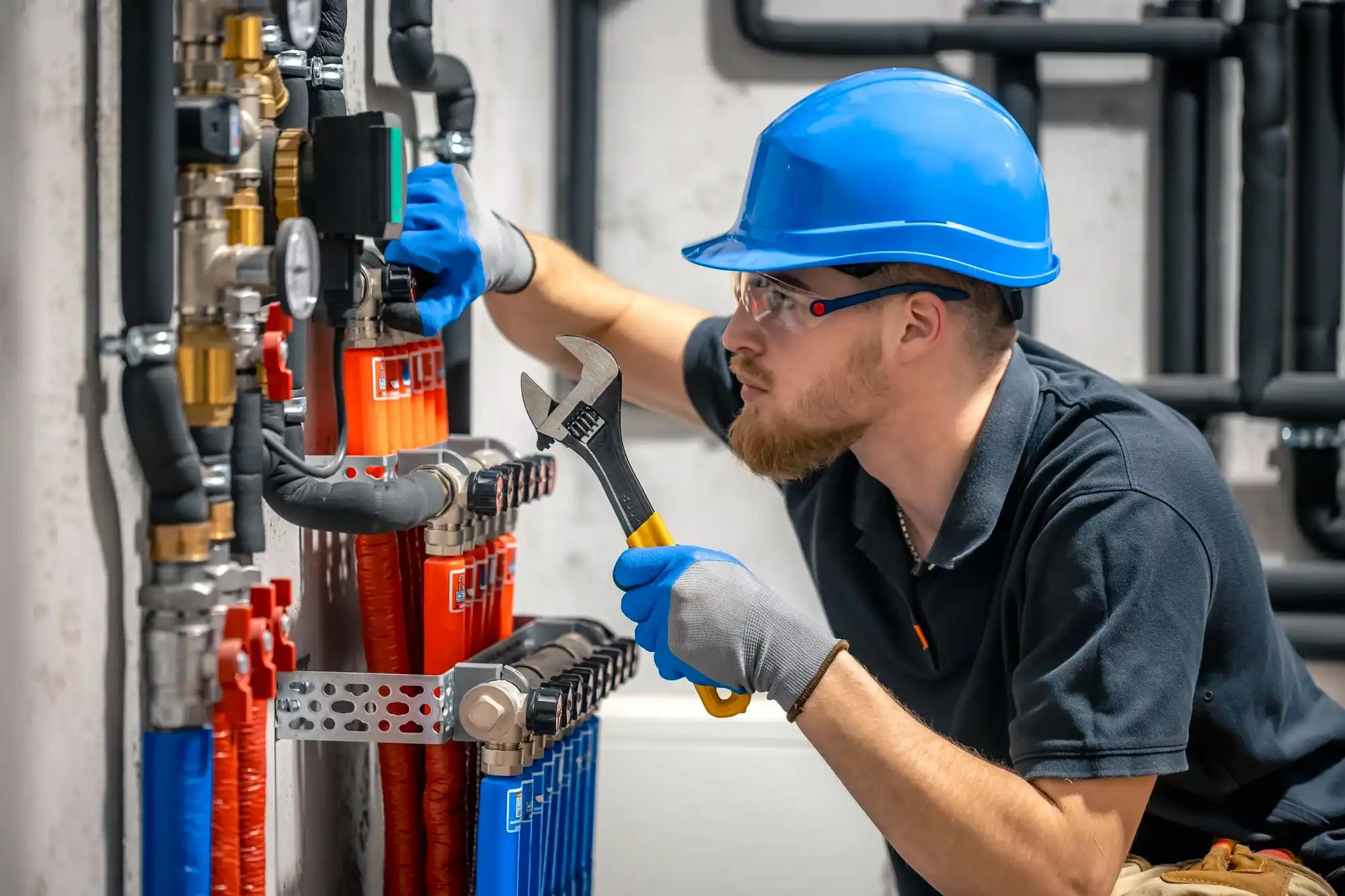
Prevents Premature System Failures
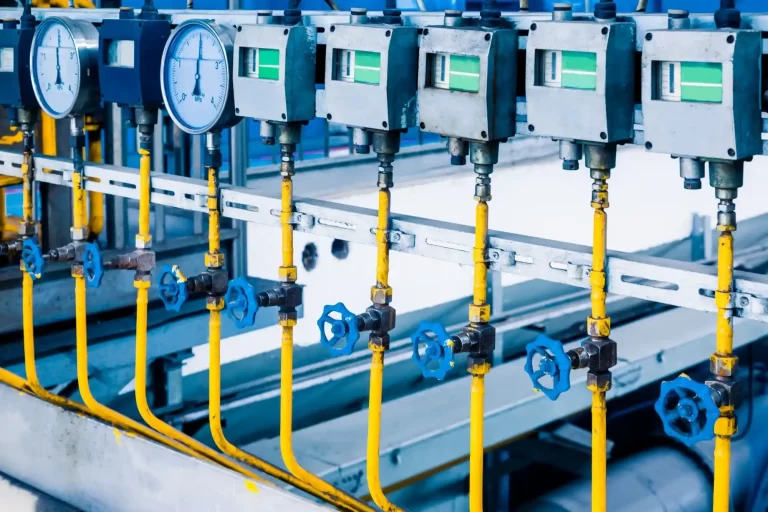
Protects Critical
Equipment
Enables Code Compliance & Safety

Optimises Support & Material Use

Reduces Rework & Site Modifications
Supports Long-Term Reliability & Expansion
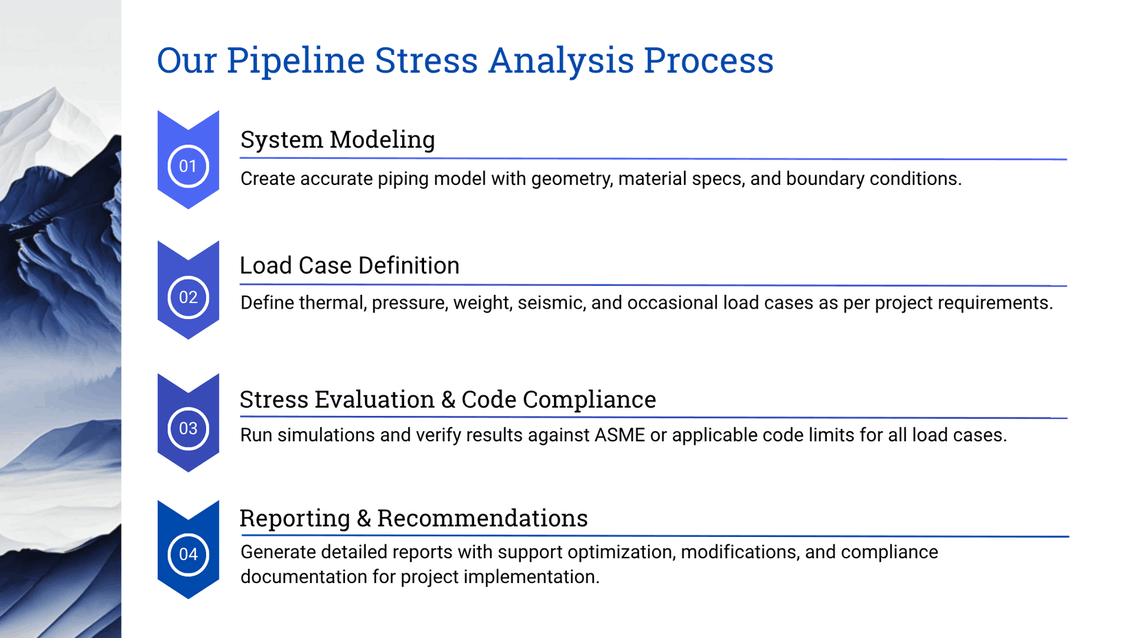
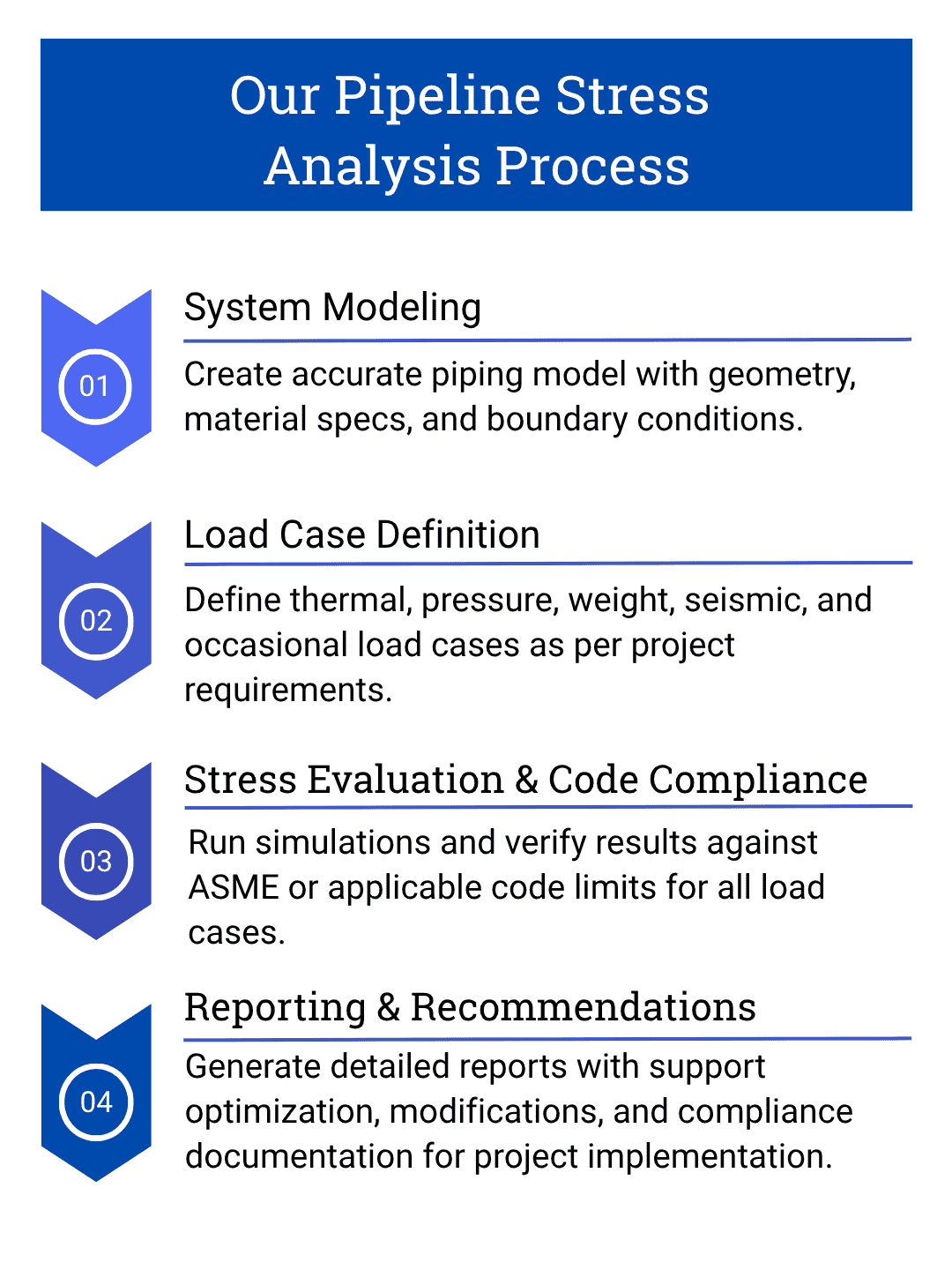
Our Pipeline Stress Analysis Process
Our process focuses on providing reliable and efficient piping systems through four key steps:
Work with us
Stress-Free Piping Stress Analysis Backed by Baseline Excellence
- Experienced team with expertise in complex piping stress evaluations
- Proficient in CAESAR II and international design codes
- Expertise in metallic, non-metallic, and FRP piping systems
- Optimised support planning for cost-effective and reliable layouts
- Accurate nozzle load checks for equipment protection and safety
- Seamless coordination with layout, civil, and structural teams
- Construction-ready deliverables with clear, code-compliant documentation
- Proven track record across industrial and infrastructure projects globally