
Common MEP Design
Mistakes That Delay Construction Projects
Why do so many construction projects miss their deadlines even after careful planning? Why do contractors and site teams end up redoing work that should have been right the first time?
The reality is that many of these problems don’t start on the construction site, but they begin much earlier, during the MEP (Mechanical, Electrical, and Plumbing) design stage. A small error in drawings can turn into a major delay on site, costing time, money, and trust between stakeholders.
Knowing what these mistakes are is the first step toward preventing them, reducing rework, and delivering projects on time and within budget.
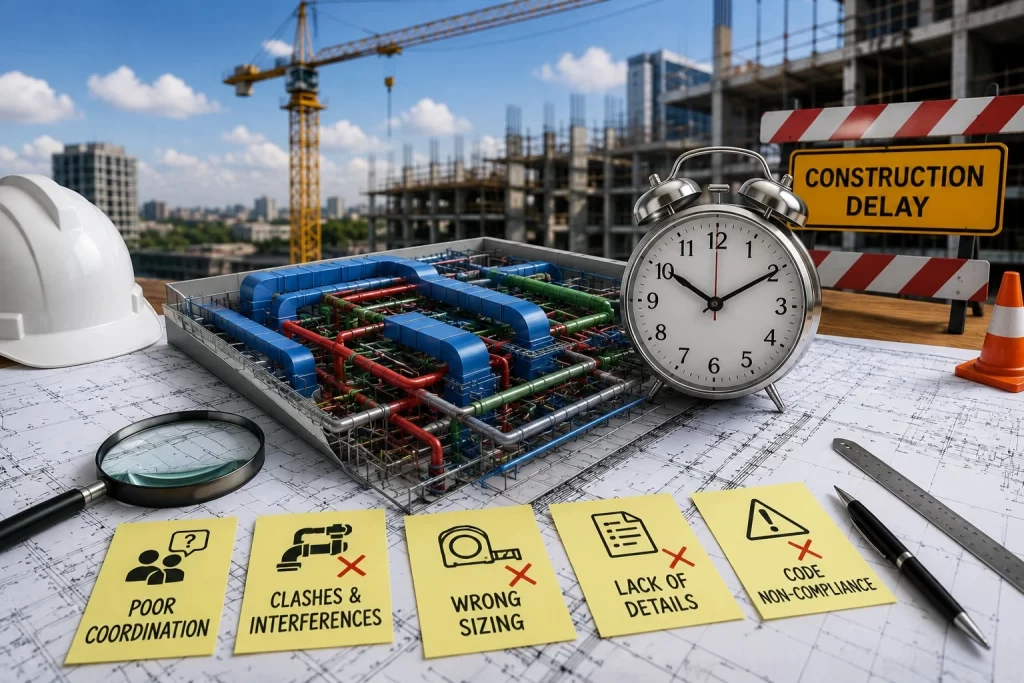
Common MEP Design Mistakes to Watch Out For
1. Poor Coordination Between MEP and Architecture
When MEP drawings are not properly coordinated with architectural and structural drawings, problems appear during construction. This leads to on-site rework, wasted material, and frustrated contractors trying to fix clashes that should have been caught earlier. Poor coordination can result in:
- Ductwork clashing with beams
- Pipes interfering with electrical conduits
- Ceiling height conflicts
- Misaligned service shafts
- Equipment placement causing obstructions
2. Inaccurate Load Calculations
Underestimating or overestimating electrical, HVAC, or plumbing loads is one of the most common and costly mistakes. When systems are not sized correctly, they waste energy, increase operating costs, and reduce overall building performance. Poor load calculations can lead to:
- Incorrectly sized HVAC systems
- Overloaded electrical systems
- Water pressure and flow issues
- Higher energy bills
- Frequent system failures and costly repairs
3. Skipping Proper Clash Detection (BIM Coordination)
Without 3D clash detection or BIM-based coordination, conflicts between different MEP systems remain unnoticed until construction begins. s a result, teams have to make last-minute design changes, replace materials, and deal with unexpected delays that affect the entire project schedule. Some of the most common consequences are:
- Multiple systems occupying the same space
- Site-level design changes needed
- Increased material and labour waste
- Delayed approvals from consultants
- Extended project completion timeline
4. Ignoring Local Codes and Compliance Norms
Every region has specific fire safety, electrical, and plumbing codes that must be followed. Overlooking these during design means rejected approvals Teams are then forced to revise drawings during construction, delaying permits and project handover. Common consequences of non-compliance include:
- Fire safety norms missed
- Electrical codes not followed
- Plumbing standards overlooked completely
- Approval rejections from authorities
- Rework needed before handover
5. Inadequate Space Allocation for MEP Systems
Poor space planning for ducts, electrical panels, risers, and equipment rooms can make installation difficult and restrict future maintenance access. Correcting these issues during construction often requires costly redesign and rework. Project teams commonly face the following challenges:
- Insufficient riser shaft space
- Equipment rooms too small
- Poor future maintenance access
- Ductwork routing becomes difficult
- Panels installed in inconvenient spots
6. Incomplete or Unclear Documentation
Vague drawings, missing specifications, or unclear notes create confusion for contractors on site. This leads to constant queries, incorrect installations, and back-and-forth communication that slows down the entire construction process.
These documentation gaps can lead to:
- Drawings missing key specifications
- Contractor queries delaying execution
- Incorrect material or equipment installed
- Miscommunication between design and site
- Repeated revisions during construction
Why Baseline Is the Best MEP Design Consultant in India
Having the right MEP design partner makes all the difference between a project that progresses efficiently and one that constantly hits roadblocks. Baseline is a leading MEP design consulting firm in Vadodara, backed by experienced engineers and modern coordination tools. We pay attention to every detail so your project faces fewer errors, less rework, and better coordination during construction.
Our team works closely with architects, structural consultants, and contractors from day one, so conflicts are caught on screen, not on site. We rely on BIM-based coordination, thorough load calculations, and strict adherence to local codes to keep projects compliant and on schedule. By partnering with Baseline, businesses across India get MEP designs that are accurate, buildable, and built to avoid the costly surprises.
Conclusion
MEP design mistakes may look small on paper, but their impact on cost, time, and quality is anything but small. Choosing an experienced MEP design consultant like Baseline means fewer surprises, fewer delays, and a path from design to handover. Get in touch with Baseline today and let our experts design your MEP systems right, the first time.
Frequently Asked Questions
Why do MEP design mistakes cause construction delays?
Errors in MEP drawings often surface only during execution, leading to on-site clashes, rework, material wastage, and approval delays that push back the entire project timeline.
How can BIM help reduce MEP design errors?
BIM allows all building systems to be modelled together in 3D, making it easier to detect clashes between ducts, pipes, and electrical systems before construction begins.
What is the cost of fixing MEP design mistakes after construction starts?
Costs vary by project, but on-site corrections are almost always more expensive than fixing issues at the design stage, due to material waste, labour, and schedule delays.
How do I choose the right MEP design consultant?
Look for a consultant with strong technical expertise, experience across similar projects, use of modern coordination tools like BIM, and a track record of on-time project delivery.
Does Baseline handle MEP design for both residential and commercial projects?
Yes, Baseline provides MEP design consultancy for residential, commercial, and industrial projects across India, tailored to each project’s scale and requirements.
Can Baseline help fix an existing MEP design that already has issues?
Yes, our team can review, audit, and revise existing MEP designs to correct errors, improve efficiency, and bring the project back on track before further delays occur.